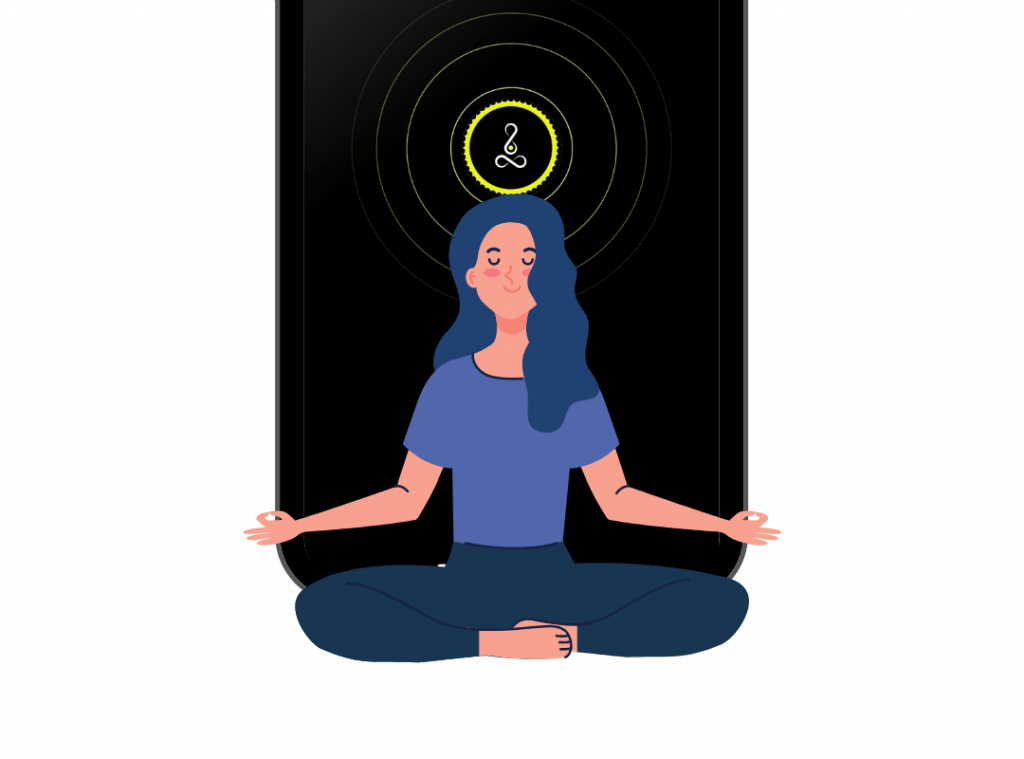

Crying during meditation is entirely normal, even a positive sign that your heart is opening and releasing. Tears are not meditation's enemy; sometimes they are meditation happening at its deepest.
You may once have sat quietly, your breathing just beginning to slow, when something suddenly rose like a wave in your chest—and tears flowed without you knowing why. Nothing sad was happening. No specific memory had been summoned. Just… tears. Along with them came a strange feeling—soft, light, and unsure what you were doing wrong.
You are doing nothing wrong.
Why Do Tears Appear During Meditation?
In everyday life, our minds constantly operate — planning, processing information, controlling emotions, and maintaining our image before others. This activity is like an always-lit screen, obscuring what is really happening underneath.
When you meditate — especially as you begin going deeper — that layer of control grows thinner. What has been hidden begins to emerge. It may be long-suppressed sadness, accumulated exhaustion never acknowledged, or an old wound not yet fully embraced.
Tears during meditation are not a collapse — they are a wall melting.
When the mind feels safe enough, it begins healing itself. Sometimes healing begins with tears.
Is Crying During Meditation Good? — The Answer Is Not Simply “Yes” or “No”
In fact, the better question is not whether it is “good or bad” — but: what are the tears telling you?
There are many kinds of tears in meditation:
- Tears of release: The body and mind have held tension for too long, and when meditation becomes deep enough, natural relaxation emerges through tears. This is a very healthy sign.
- Tears of connection: A memory or old emotion emerges and is seen without judgment for the first time. This is the heart of recognition, acceptance, and transformation.
- Tears of gratitude: Sometimes, in a moment of deep silence, you touch something sacred within — and tears flow from pure emotion, without suffering mixed in.
- Tears of resistance: The mind resists something — a truth, loss, or unaccepted change. This kind needs to be sat with, not stopped.
All these kinds of tears have value. Meditation is not solely a space for peace and relaxation. It is a space to real.
You Are Not That Sadness
The most important thing to understand when crying during meditation is this: you are not the sadness arising. You are witnessing that sadness.
“You are not the sadness. You are witnessing the sadness.”
This is the fundamental difference between being swept into emotion and truly meditating with emotion. When swept away, you become the story. When sitting with it, you are the space containing that story.
Perhaps you have sat and wondered, “Why am I crying for no reason?” — and immediately wanted to stop, take control, and make it end. Yet that very act of control interrupts the healing process already under way.
Instead, try this: embrace it fully until it dissolves on its own.
When Should You Pay Closer Attention?
Meditation can bring moments of intense emotion, and that is entirely normal. However, if crying during meditation accompanies prolonged exhaustion, persistent hopelessness, or difficult-to-control states that affect everyday life, it is time to seek additional professional support. Meditation supports inner health, but does not replace medical care or help from a psychologist. If you experience severe anxiety or depression, consult a doctor or professional — the Inti Care team can accompany you on this journey.
What Happens After the Tears?
Many people describe the feeling after crying during meditation as: lighter and clearer, as though setting down something carried too long.
That is not a coincidence. When an emotion is fully acknowledged — without judgment, without being forced to stop, without being hastily explained — it naturally transforms. This is the core of the process we call healing: recognizing, accepting, transforming.
A wound does not need to be resolved. It needs to be fully embraced until it dissolves on its own.
In many cases, tears are the very moment that transformation is happening — not in your head, but throughout your body.
Practice Now: Sitting with Emotions — 5 Minutes
The next time tears arise during meditation, or emotions swell at any time, try this simple practice:
- Step 1 — Recognize (30 seconds): Place your hand on your chest. Silently tell yourself: “I notice that something is arising within me.” You do not need to name or explain it.
- Step 2 — Allow (1 minute): Instead of stopping, breathe and allow it to be there. You do not need to do anything with it. Simply let it be present — like allowing a guest to sit in your home.
- Step 3 — Observe (2 minutes): Silently ask, “Where in my body is this feeling?” It may be in your chest, throat, or abdomen. Simply observe without analyzing. Like watching clouds drift by — you are not that cloud.
- Step 4 — Embrace fully (1 minute): Breathe deeply and imagine your breath as warm light spreading into the exact place where the emotion resides. No need to make it disappear. Simply embrace it with your presence.
- Step 5 — Return (30 seconds): Open your eyes slowly. Look around. Remind yourself: “I am greater than this emotion. I am the space that holds it.”
This practice does not aim to erase sadness or stop you crying. It helps you learn how to be with yourself — the foundation of all healing.
Another Perspective: Why Might You Cry More When Starting Meditation?
If you have just begun meditating and find yourself crying more often than before, do not be surprised — and do not worry.
Before meditating, many people have unknowingly built sophisticated emotional-control systems: busyness, phone scrolling, constant work, movies… All are ways to avoid sit still with yourself.
During meditation, that system stops. What has been waiting in line begins to be processed. Meditation is not making you “worse” — it is doing exactly what it is meant to do.
When you are quiet enough, someone within you always knows the answer.
The meditation journey is not about becoming forever calm and never affected. It is about becoming strong enough to embrace every moment—including moments of tears.
Tears and the Path Home
Awakening is not becoming someone else — it is returning to yourself. Sometimes that path passes through depths we have not visited for a long time.
Seen in this light, tears during meditation are not weakness. They are not failure. They are courage — the courage to sit still with yourself, without running away or covering things up.
You may once have believed meditation was about becoming peaceful and no longer being pulled around by emotions. That is both true and incomplete. True peace is not the absence of waves—it is knowing you are the ocean, not the wave.
It is not easy. But it is possible.
If you want to explore this journey more deeply, the book Anyone Can Meditate and A User’s Guide to Your Mind by Tạ Minh Tuấn (Saga) can be a companion on that path.
Tạ Minh Tuấn (Saga)
Frequently asked questions
Is crying during meditation good?
Yes—crying during meditation is often a sign that your mind is letting go and healing. It is not something to worry about or stop, but a process of recognition–acceptance–transformation unfolding naturally.
Why do I often cry during meditation even when nothing sad has happened?
When the mind becomes quiet enough, long-suppressed emotions — exhaustion, accumulated tension, old wounds never fully embraced — begin surfacing. No specific reason is needed; body and mind are processing what remains unresolved.
What should I do when I cry during meditation?
Do not rush to stop or control it. Breathe, place your hand on your chest, and allow the emotion to be present. Observe it like a drifting cloud — you are not that cloud. The “sit with an emotion for 5 minutes” practice in this article may help you.
Does crying a lot during meditation mean I have depression?
Crying during meditation alone is usually a healthy response to letting go. However, if it accompanies persistent hopelessness, exhaustion, or disrupted daily functioning, consult a psychologist or doctor — meditation cannot replace professional medical assessment.
How long into deep meditation will I stop crying?
There is no fixed timeline. As layers of emotion are gradually processed, tears naturally lessen. The quality of presence matters more: genuinely sitting with yourself, rather than sitting to achieve a particular state.