Does App-Based Meditation Work? — A Direct Answer
Yes—meditating through an app can effective, especially for beginners. But how effective, and more importantly — effective in what sense — that is the question worth sitting with.
You may once have downloaded a meditation app on a sleepless evening, opened it to hear a gentle guiding voice, then felt a little better the next morning. Then you wondered: is that pleasant feeling real meditation, or am I merely listening to a sleep podcast? That is no small question. It deserves a serious answer.
What Is App-Based Meditation — And Why Is It So Popular?
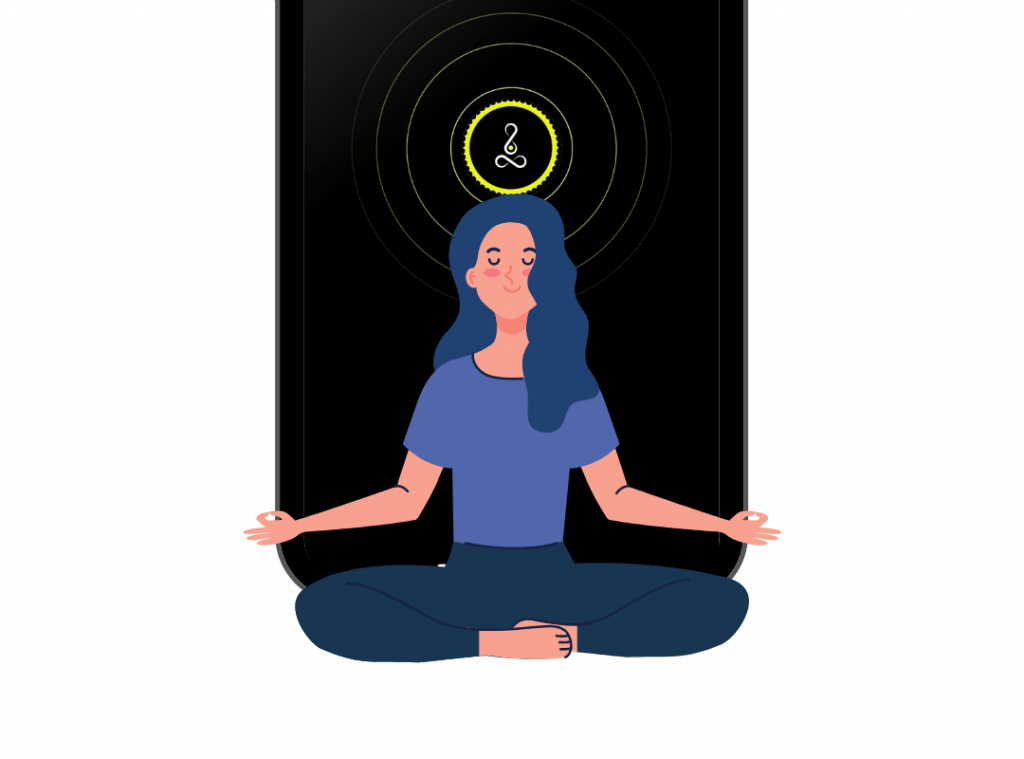
Meditation apps like Headspace and Calm, or Vietnamese-language platforms, typically offer guided sessions: a voice leads you through inhaling, exhaling, observing thoughts, and relaxing the body. Usually 5 to 20 minutes, with background music and clear structure.
Its appeal is so simple it is easy to overlook: it lowers the barrier to starting almost to zero. You need no teacher, temple, or ability to sit in full lotus. Just headphones and 10 minutes before bed.
In a world pulling human attention in a hundred directions at once, that is no small advantage.
What Meditation Apps Do Really Well
- Build the habit: The app helps you sit down—at the right time, following the right steps. For someone without a foundation, this is real value.
- Introducing the language of meditation: “Observe the breath,” “let thoughts drift by like clouds” — these images open the door to a new understanding of the mind.
- Immediate stress reduction: Considerable practical evidence suggests that just a few minutes of conscious breathing can calm the nervous system.
- Accessible Anytime, Anywhere: On a plane, in a hotel room, at 2 in the morning when anxious — the app is always there.
Meditation is not leaving life behind — it is entering life deeply. An app can be the first doorway into that passage.
Limits an App Cannot Overcome
Here is the more important part — the part few state directly.
App-based meditation, in essence, is externally guided meditation. It means your concentration always clings to an external voice, structure, or counting rhythm. This creates a subtle paradox:
You are using something external to train your ability to turn inward. At some point, that “crutch” must be set aside.
Specifically, there are three core limitations:
- The app cannot ask you a question in return. In deep meditation, what matters is not that you follow the instructions — but you begin to ask yourself: Who is aware of this? Who is observing this breath? That question is not in any algorithm.
- The app cannot adjust to your actual state today. Some days, the mind holds a specific pain, memory, or repeating reaction pattern. That needs companionship, not to be bypassed with background music.
- An app can create the feeling that you have “meditated” when you may not actually have done so. Perhaps you listened to 20 minutes of guidance, body fully relaxed and mind floating, then afterward reacted exactly as before to the same irritation. That signals relaxation rather than awakening.
Relaxation and awakening — two very different things. Both have value, but need to be named correctly.
Meditating Independently — Harder, but Deeper
When you sit down with nothing — no music, guiding voice, or structure — the first thing to appear is often… discomfort. Restlessness. The noise of the mind.
And right there, meditation truly begins.
Because meditation is not a state of complete quiet, but the ability to recognize without being swept along what happens within. Sitting independently leaves you nothing to lean on but yourself. That is both challenge and gift.
Awakening is not becoming someone else — it is returning to yourself. Sometimes that path home must be walked in complete silence.
Independent meditation also has clearer requirements: a method clear enough to avoid getting lost, and ideally a teacher or community to support difficult mental states — especially when meditation reaches unprocessed emotions.
So — Choose an App or Meditate Independently?
The answer is not “either this or that.” The answer is know where you are on the path.
A layered perspective may help:
- Level 1 — Just Beginning: The app is an ideal companion. Use it to build the habit of sitting down each day.
- Level 2 — A Habit Established: Begin alternating with unguided sessions on your own, even for just 5 minutes. Observe the difference.
- Level 3 — Wanting to Go Deeper: Find a clearly structured method and a genuine teacher. At this point, an app is supplementary, not foundational.
- Level 4 — Practice as a Way of Life: Meditation is no longer a separate activity — it is how you are present in each moment. Whether or not you use an app is no longer the important question.
Practice Now — 5 Minutes Without an App
You need not download anything. Just a quiet seat and 5 minutes.
- Sit with your back straight — on a chair or the floor, as you prefer. Gently close your eyes or look down at a fixed point.
- Inhale slowly — count silently: 1, 2, 3, 4. Notice the sensation of air entering through the nose.
- Hold gently — 1, 2.
- Exhale completely — count: 1, 2, 3, 4, 5, 6. Let the belly fall naturally.
- After 3 such breathing cycles, let go of counting. Just sit. Just listen. Just feel.
- When a thought arises, you do not need to push it away — simply recognize it and gently return to breathing. That is meditation.
Do this for 5 minutes, then ask yourself: How does this feel different from following an app? That question is already a step in meditation.
A Note If You Use Meditation to Cope with Anxiety or Depression
Meditation can be a good companion in caring for mental health — but this article’s content is intended for sharing and practice, does not replace medical assessment and treatment. If you are experiencing prolonged anxiety, depression, or more serious psychological states, consult a psychologist or doctor. Inti Care may be a place to begin seeking appropriate support.
Conclusion
Meditation apps are not the enemy of real meditation. But they are not the destination either.
It is a doorway. And a doorway only has meaning when you walk through it — not when you remain forever on the threshold, hearing the guiding voice for the two-hundredth time.
Are you ready to step in yourself?
It is not easy. But it is possible.
— Tạ Minh Tuấn (Saga)
Frequently asked questions
Is app-based meditation effective for beginners?
Yes. Meditation apps are well suited to beginners because they help build a regular sitting practice and introduce basic techniques such as observing the breath and letting thoughts pass.
How does guided meditation through an app differ from meditating on your own?
App-based meditation relies on external guidance — a voice, structure, background music. Meditating independently requires turning inward without external support, potentially reaching deeper levels of awareness.
How long should I use a meditation app before sitting independently?
There is no fixed milestone. Once you have developed a regular sitting practice and begin to feel that you “need something more” from your meditation sessions — that is the sign to begin alternating them with unguided sessions on your own.
Can a meditation app replace learning with a teacher?
Not entirely. An app can support daily habits, but a real teacher can ask questions in return, adapt to your specific state, and accompany you through complex psychological experiences in ways an app cannot.
Can app-based meditation help reduce stress?
Yes, breathing exercises and short guided meditations can help calm the nervous system and reduce immediate stress. However, this is relaxation—different from the deeper awakening that meditation aims toward over time.