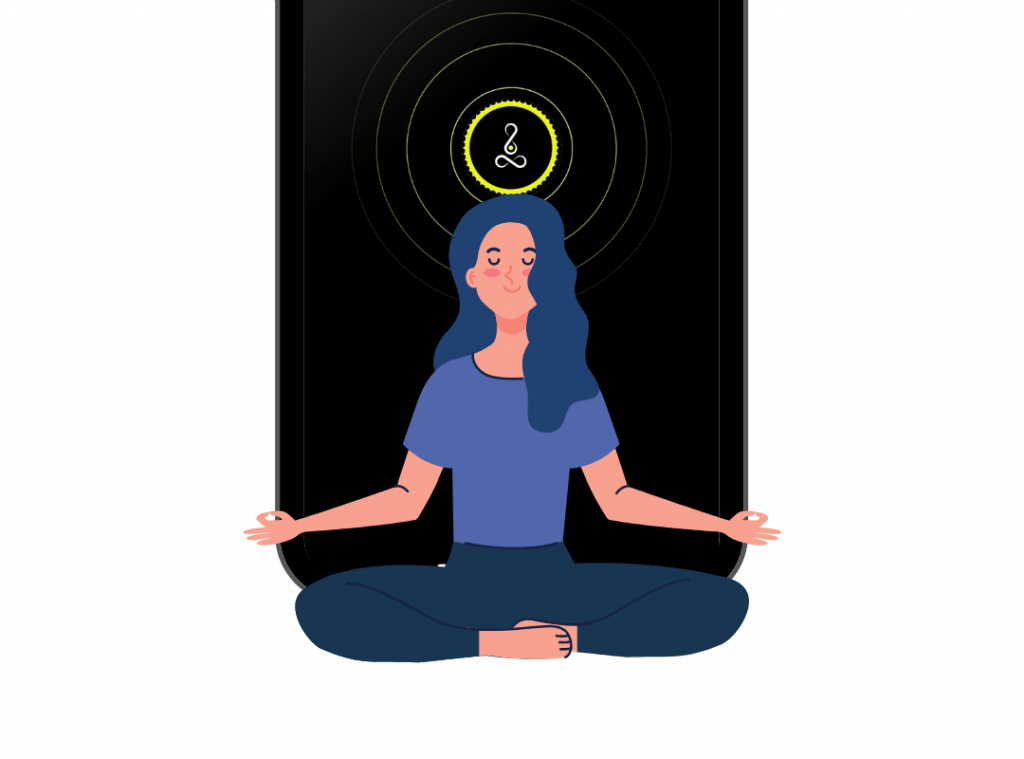

Meditation for beginners does not require hours of sitting, knowledge of scriptures, or a quiet mountain cave. Just 10 minutes each morning and a sufficiently concrete path — you can start today, even in a rented room or the noisiest office corner.
You may have tried meditation a few times, only to doze off or think about deadlines each time, then wondered: “Am I someone who cannot meditate?” The answer: nobody is incapable of meditation. Some simply have not found a suitable pathway yet.
1. Meditation Is Not Emptying Your Head—This Is the Most Important Thing to Know First
The biggest misunderstanding that makes beginners quit after their first day is believing meditation means “thinking about nothing.” Your brain is made to think—just as your heart is made to beat. Asking it to stop completely is impossible and unnecessary.
Meditation is not leaving life behind — it is entering life deeply. Not switching off thoughts, but learning not to be swept along by them.
In Awakening Meditation, a commonly used image is this: thoughts are like clouds drifting across the sky. The sky does not try to hold them or push them away. It simply… remains there. Vast. Quiet beneath all that movement. The purpose of meditation is to help you recognize: you are the sky, not the cloud.
2. What You Need before Beginning the 7-Day Pathway
Very little. Truly very little:
- Somewhere to sit: an office chair, the floor, or the edge of your bed.
- A comfortable posture with a naturally upright back; no need for full lotus if your knees object.
- A timer — the phone in your hand is enough.
- And most importantly: willing to sit still without needing to do it right.
No incense, meditation music, or special clothes are needed. The pajamas you wear at 6 a.m. are perfectly acceptable.
3. The 7-Day Awakening Meditation Pathway—Specific Steps
This path is designed progressively, adding a new layer of awareness each day without skipping ahead or forcing. You need not be perfect. You only need to be present.
Day 1 — Just Sit (5 minutes)
Today, you do not need to do anything special. Set a timer for 5 minutes. Sit down. Close your eyes. Let everything unfold. If you think about your boss's email — that is okay. If you hear traffic outside — that is okay. The only goal: sit for all 5 minutes without getting up. That is today's victory.
Day 2 — Feel the Breath (7 minutes)
Today, add an anchor: your breath. You do not need to breathe in any special way. Simply pay attention — air coming in, air going out. Sensations in the nose, chest, and belly. When the mind wanders (and it will), gently bring attention back to the breath. Do not blame yourself. Simply return.
Day 3 — Name Your Thoughts (7 minutes)
For the first time, play an interesting game: when a thought arises, silently name it — “worry,” “planning,” “memory,” “judgment.” Let it drift away and return to the breath. This simple technique creates a small distance between you and thought, and that distance is where freedom begins.
Day 4 — Body Meditation (10 minutes)
Today, expand your awareness to your whole body. Begin at the crown of your head and slowly scan downward — forehead, shoulders, chest, hands, belly, legs. Do not try to change anything. Simply notice. Tense? Light? Warm? Numb? Your body speaks to you all day — today, for the first time, you truly listen.
Day 5 — The Inward-Reflection Question (10 minutes)
This is a distinctive step in Awakening Meditation — the technique called Turning the Light Inward. After a few minutes of following the breath, gently ask within: “Who is aware of this?” No reasoned answer is needed. Just feel. This question is like a finger pointing at the moon: it is not the moon, but it helps you look in the right direction.
When you are quiet enough, someone within you always knows the answer.
Day 6 — Meditation in Daily Life (10 minutes + 3 moments during the day)
Today, add a challenge: besides your morning meditation, choose 3 moments during the day to “return” — perhaps while waiting for the elevator, pouring coffee, or before opening email. Each time, take just 3 conscious breaths. Meditation is not only the mat you sit on in the morning — it is how you live.
Day 7 — Sit Quietly with Yourself (15 minutes)
On the last day, no new technique is needed. Sit with everything learned over the past 6 days. No agenda or goal. Just you with yourself. When the timer rings, ask: did you recognize anything about yourself in the past 7 days?
4. Practice Now—A 90-Second Exercise You Can Do Right Away
You need not wait until tomorrow morning. Right now, wherever you are sitting:
- Keep your back straight, both feet touching the ground.
- Close your eyes or lower your gaze — as you prefer.
- Inhale slowly, count 1–2–3–4.
- Hold gently, count 1–2.
- Exhale Slowly, count 1–2–3–4–5–6.
- Repeat 3 times.
Done. 90 seconds. Your nervous system has just received a signal: it is safe now; you can breathe. That is meditation. Nothing more is needed to begin.
5. What Will Happen (and Need Not Frighten You)
You will think about miscellaneous things—that is normal. Some sessions will feel as though you “did nothing”—also normal. Some people cry for no clear reason when first meditating, others nod off, and others become irritated because “why is silence so difficult?”
A common misconception is that good meditation must be completely quiet, with no emotions arising. In fact, sometimes the most “chaotic” session is when you touch what is most real within.
You are not that unease. You are witnessing it. The witness is always larger than what is witnessed.
If during practice you experience increasing anxiety, prolonged insomnia, or difficult emotions that are hard to manage, please note: meditation is a supportive psychological practice, not a replacement for medical care. For more serious states, consult a mental health professional — the team at Inti Foundation can accompany you too.
6. After 7 Days—What Is the Next Step?
Seven days are not the destination, but the threshold. After this pathway, you have a foundation to continue deeper into Awakening Meditation — the complete 6-step system, distilled and shared with thousands of practitioners.
But first — complete these 7 days. One day at a time. There is no need to look further ahead.
Awakening is not becoming someone else — it is returning to yourself. That journey home begins with one breath.
It is not easy. But it is possible.
Tạ Minh Tuấn (Saga)
Frequently asked questions
How long should beginners meditate each day?
Just 5–10 minutes daily is enough to begin. Consistency matters more than duration—7 minutes every morning for 7 consecutive days is more effective than sitting for 1 hour once and then skipping the whole week.
I keep thinking random thoughts while meditating. Am I doing it wrong?
You are not doing anything wrong. Thoughts arising during meditation are entirely normal, even a sign that you are truly paying attention. The aim is not to stop thinking, but to notice wandering and gently return to the breath.
How does Awakening Meditation differ from ordinary meditation?
The Awakening Meditation Method goes beyond relaxation or stress relief — it aims to recognize the nature of consciousness, understand how you respond to life, and gradually move beyond unconscious patterns. This is the foundation for deeper mindful practice.
When should busy people meditate if they have no morning time?
Any time you can sit quietly for 5–10 minutes works—on a bus, during lunch break, or before sleep. However, early morning before the day begins is often easiest to sustain because it has the fewest interruptions.
Can meditation help me sleep better?
Many people who meditate report a noticeable improvement in sleep quality. However, if you have persistent insomnia or a serious sleep disorder, consult a doctor or mental health professional — meditation is a supportive practice, not a medical treatment.