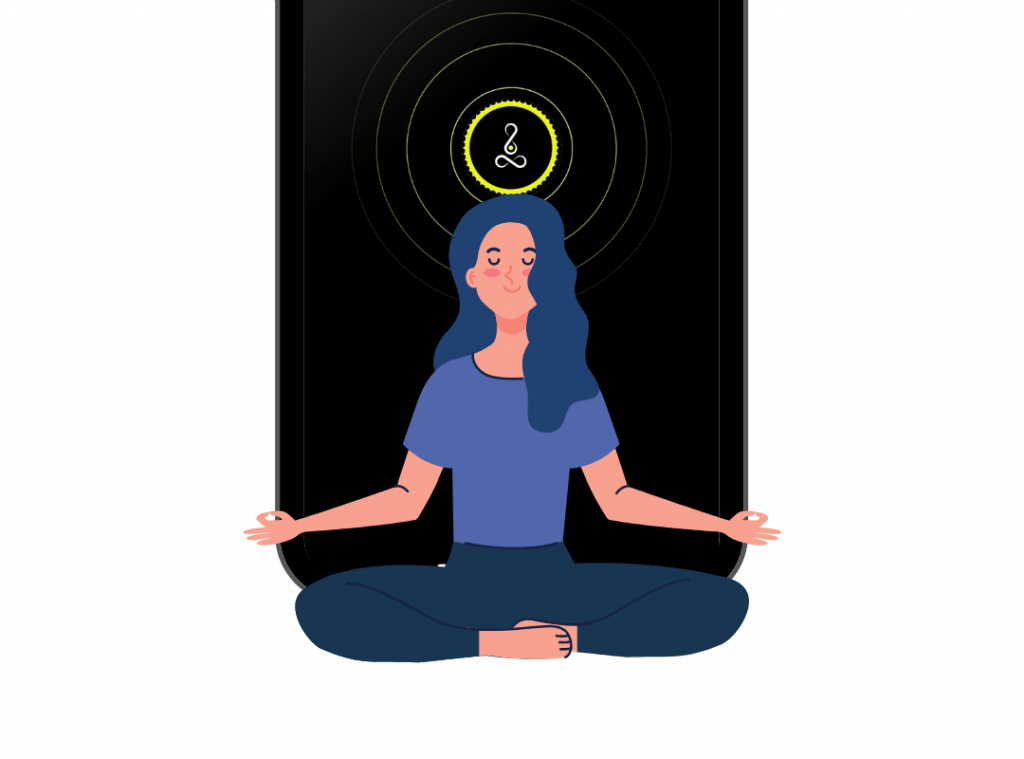
Meditation is entirely suitable for engineers and programmers — not because it is “mystical,” but because it follows principles technology professionals love: observing a system, identifying bugs, and intervening at the right point. If you seek deeper focus, faster recovery after exhausting sprints, and freedom from “mental tabs” slowing your processing, this article is for you.
1. How Many Tabs Is Your Brain Running?
You may have sat at your desk with your code editor open, Jira open, Slack flashing, and dozens of unread emails—while an unstoppable loop ran in your head: next week's deadline, unfinished code reviews, yesterday's bug whose cause you still do not understand, and a vague question behind it all: “What am I doing?”
Not laziness or lack of ability. Just too many processes running at once, without a garbage collector to clean up.
This is a state many engineers, programmers, and people in technology recognize when they turn to meditation. Not because they want “peace and quiet” in the sense of sitting and watching clouds pass. But because they clearly feel: the mind no longer works as effectively as it could.
Meditation is not shutting down the system. It is restarting properly — so everything runs cleaner, faster, and with fewer errors.
2. Why Technology Workers Often Overlook Meditation (and Why That Is a Logical Error)
A common response from technically minded people is: “Meditation sounds unfounded. I need something evidence-based.”
The answer: Mindfulness-Based Stress Reduction (MBSR), researched at Johns Hopkins and published in JAMA Internal Medicine in 2014, showed mindfulness meditation's effectiveness for anxiety, stress, and depression. Google built an entire “Search Inside Yourself” program for employees, beginning with engineers.
But the deeper reason is not the number. It is this:
You can write the world's most optimized code, but if the hardware overheats, everything still slows down. Your mind is that hardware.
The problem is not a lack of skills or methods. It is the mind’s operating foundation is not being maintained. And that is why meditation exists.
3. What Deep Work Really Is—and Why Mindfulness Is Its Foundation
Many programmers have read about deep work — uninterrupted, focused work that produces high-quality output. But one thing is rarely mentioned: deep work cannot be forced through willpower. It only happens when the mind is truly here — not scattered between emails, worries about a performance review, and the question “What's for dinner tonight?”
Mindfulness—intentional attention to the present moment—is the foundational skill that makes deep work possible. Not a time-management technique or website-blocking app, but the ability know where you are, and return when the mind begins to wander.
Are you here? Or thinking about the pull request rejected this morning?
That question, almost laughably simple, is the essence of mindfulness. It can completely change how you work.
4. Burnout Is Not Working Too Much—It Is Disconnection
There is a common misconception: burnout signifies dedication and doing too much. Looking more closely, however, we see: burnout does not come from doing too much — it comes from doing without being present yourself.
For engineers and programmers, this is particularly common. You may spend 10 hours before a screen, but “you” actually left in the third hour. The rest is the body on autopilot.
Meditation does not resolve burnout by reducing working hours. It helps you true presence in each hour you work. Curiously, when truly present, work becomes lighter, not heavier.
“When you become quiet enough, someone within you always knows the answer.”
5. How Meditation Works for a Technical Mind
Let us put it in terms an engineer might find familiar.
The brain has two main modes: focused mode (focused mode — when you are solving a specific problem) and diffuse mode (diffuse mode — when the brain “hibernates” and processes in the background, often while you shower or walk). Most good programmers know that the best insights often come when they not trying — when leaving the keyboard and letting the mind wander.
Meditation — particularly mindfulness meditation — trains the ability to deliberately switch between those two modes. It does not replace logical thinking. It helps logical thinking work better by clearing background noise.
There is also something called Turning the Light Inward — the ability to turn the light of awareness inward and ask: “Who is aware of this?” For programmers, this is like adding a logging layer to your mind so you can see which processes are running, leaking memory, or should be terminated.
6. Practice Now: A 90-Second Exercise for Programmers
No cushion. No incense. No course registration. Just 90 seconds — and you can do it now, between two commits.
The “Commit & Reset” Technique (90 seconds):
- Step 1 — Pause (10 seconds): Take your hands off the keyboard. Do not look at the screen. Gently sit upright.
- Step 2 — Observe (30 seconds): Breathe in slowly for 4 counts and out for 6. Nothing else is needed. Simply feel the air entering and leaving.
- Step 3 — Scan (30 seconds): Ask gently in your mind: “What am I feeling in my body right now?” Are your shoulders tense? Is your jaw grinding? Simply notice — no correction needed.
- Step 4 — Return (20 seconds): One final deep breath. Look at the screen with fresh eyes, as though reading that code for the first time.
Do this 3 times daily: before work, after lunch, and before shutting down your computer. After two weeks, you will notice that you begin to be able to choose a response rather than being swept into reaction.
This is the first step in Awakening Meditation — a 6-step system designed so that busy, logical thinkers can practice directly in real life.
7. Something I Want to Tell You Plainly
If you are an engineer, programmer, or technology professional reading this, you may have tried and abandoned many “wellness trends.” Pomodoro. GTD. Headspace. Cold showers. Then nothing.
What makes meditation different is not that it is “more mystical.” It is that it is not an external technique added on — it is the change how you operate from within. Like refactoring a system's architecture rather than adding a new plugin.
It is not easy. But it is possible.
Not everyone needs to begin with a long retreat or hours of stillness. Sometimes just 90 seconds of genuine presence is enough to notice a difference.
Note: If you face persistent anxiety, severe insomnia, or exhaustion that does not improve, this article offers information and practice, not medical assessment. Seek a psychologist or doctor; you can also consult the team at Inti Care to receive more suitable companionship.
Frequently asked questions
Can meditation truly help programmers focus better on coding?
Yes. Mindfulness meditation trains the ability to sustain attention and recognize when the mind begins to wander—the very foundation of deep work. No time-management technique can replace this.
How long should a busy engineer meditate each day?
Starting with just 90 seconds to 5 minutes is enough to build a habit. Consistency matters more than duration—a little each day is far better than one long session weekly.
Is meditation suitable for logical thinkers who dislike mystical things?
Entirely suitable. Mindfulness meditation is an observational skill that can be learned and measured—closer to analytical thinking than vague spirituality. Many major technology companies, such as Google, have incorporated mindfulness into internal training.
Can meditation cure engineers' burnout?
Meditation helps restore connection with yourself and reduce the autopilot state that leads to burnout. However, severe burnout (insomnia, prolonged exhaustion, complete loss of motivation) should be addressed with psychological support as well — not meditation alone.
What is the Awakening Meditation Method for programmers?
The Awakening Meditation Method is a system of 6 meditation steps designed for busy people who think logically and need concrete results. You can learn more at thienthuctinh.com.